
Russian Manicure
in Dubai
The dry, e-file cuticle technique that gives an ultra-clean nail margin and colour that holds for weeks. Precise work, never a conveyor belt.
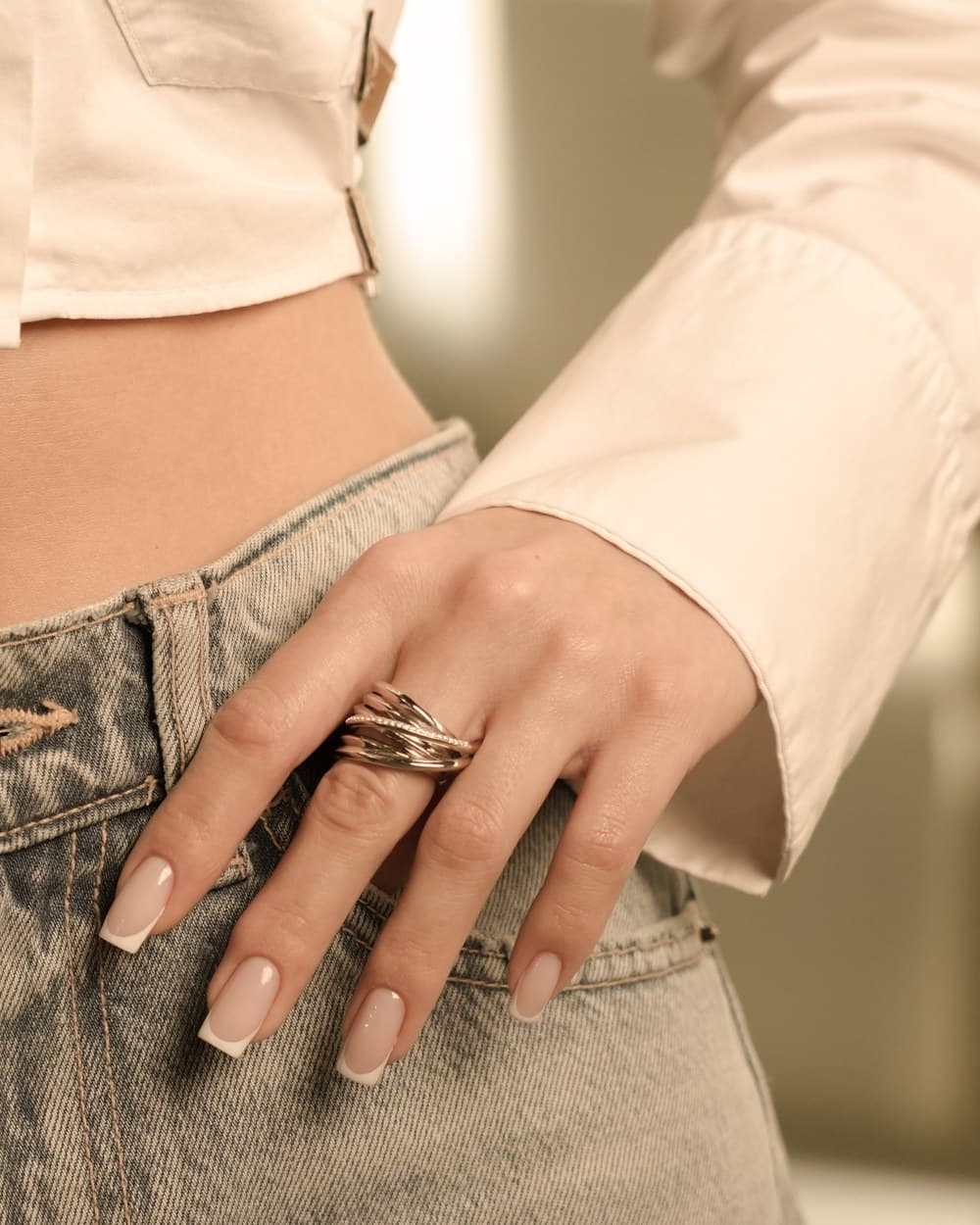
A Russian manicure is a machine (e-file) technique in which the cuticle and side walls are worked on dry, with no soaking and no aggressive cutting. The specialist gently opens and refines the growth zone so colour can be applied right up to the cuticle.
It is sometimes called a dry manicure, an e-file manicure or a combined manicure. All three names point at the same two defining features: there is no soaking bowl, and a rotating bit does the work a nipper would otherwise do.
The dry part matters because water softens and swells the skin around the nail, which makes it harder to see exactly where the living tissue ends. Removing the soak removes that ambiguity.
The file then lifts the eponychium, the fold of skin at the base of the nail, and clears away the pterygium, the thin layer of dead tissue that grows onto the nail plate itself. On most nails a classic manicure leaves that band behind.
That is why the result reads so clean: clearing it exposes slightly more of the usable nail surface, there is no gap at the base, and the gel sits with a crisp, almost built-in edge. The same nail often looks longer than it does after a classic treatment.
The practical difference shows up two or three weeks later. Nothing about the product itself lasts longer — gel polish adheres for the same length of time either way. What changes is how quickly regrowth becomes something you notice, which is why many people go three to four weeks rather than two.
Four steps
A Russian manicure suits anyone who wants an impeccable look for as long as possible: before travel, an event, or simply a full schedule with no time for frequent touch-ups. It also suits thin or weakened nails, thanks to careful work without traumatic cutting.
It is safe when performed by someone properly trained, and it carries real risks when it is not. The file works within a millimetre or two of living tissue. Applied with too much pressure, or with the wrong bit, or at the wrong angle, it can thin the nail plate, leaving nails that feel weak and bendy for months while they grow out.
Working too aggressively into the fold can cut the skin, and because the eponychium is a seal that protects the nail matrix, damaging it repeatedly can affect how the nail grows. Tool hygiene matters more here than in a classic manicure, because any break in the skin is a route for infection: bits should be sterilised in an autoclave between clients, not simply wiped.
Signs it was done well are no soreness afterwards, no bleeding at any point, no white or dusty appearance to the nail plate, and a cuticle area that looks clean rather than raw or red. If your nails hurt the following day, that was not a good manicure regardless of how it looked.
It is not the right choice for everyone. Very thin or damaged nails can be made worse before they are made better, and a gentler approach while they recover is usually the better call. With an active infection, broken skin or inflammation around the nail, the work should wait, and certain conditions affecting circulation or healing, and some medications, make skin more fragile and easier to injure.
Only Downtown Dubai uses the words Russian manicure on its price list. The other two salons list the same electric-file technique under different names, so ask for the technique rather than the label if you are booking anywhere else — the same words do not appear on all three lists.
Common questions
Russian Manicure in Dubai
Book at the salon that suits you: Downtown Dubai, Dubai Marina or Palm Jumeirah.